

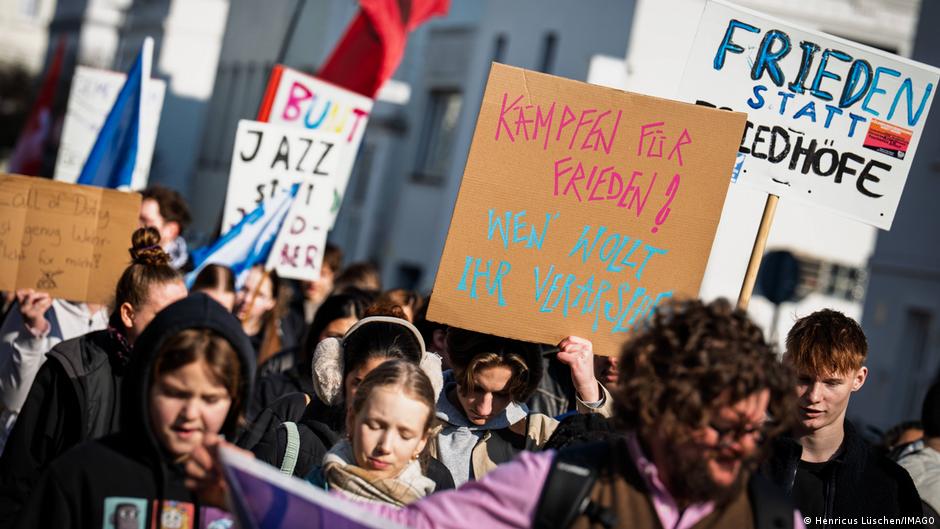
Young people gathered in Berlin’s central Potsdamer Square on Thursday and marched through the German capital to protest against the government’s plans to reintroduce military service. While the police counted around 3,000 participants, organizers claimed there were 6,000 demonstrators in Berlin and 50,000 in more than 130 towns and cities across Germany.
I know in Spanish «male» and «female» is used in a biological way, as in «a male human», so calling a woman «a female» (or a man «a male») is seen as treating them as animals, as not the same as you. I think it’s the same in English (as the r/MenAndFemales Reddit page suggests), but I can’t confirm this in any dictionary.
I really feel that I stumbled into a kind of crazy debate. I googled around and you can find articles referring to “males” and “females” in a human context from the most reliable sources. Wikipedia does it. The NIH does it. You can find it in newspapers like the Guardian. You can find statistics from the world bank about “females” and “males” per country. And then you have a vicious debate on Reddit (and here) where users are attacking others as sexist if they use the term.
English is not my native language, but I am not sure where this is coming from. The animal connection doesn’t seem to be correct to me as the general usage just seems to be a plural of “male” and “female”? And some people seem to think that “men” and “women” would be better terms, but those terms are usually referring to adults and not boys and girls?
Here’s a German native with that same question. So yes, it seems like a loaded term, but a very common one.
Yes, from what I’ve seen that’s also a problem, because people use «men» and «girl», so a child term for women and an adult term for men. I think the point is to use the adult form, if you’re not talking about literal children.